
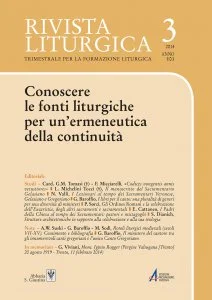
Description
P. Sorci pp. 547-570
Gli Ordines Romani e la celebrazione dell’Eucaristia, degli altri sacramenti e sacramentali
Gli Ordines Romani, sorti tra i sec. VII e X, parte a Roma e parte in terra franco-germanica, offrono informazioni sul modo in cui venivano celebrate le azioni liturgiche e sul modo di vivere della Chiesa al trapasso dal I al II millennio. Sono testimonianza preziosa del processo di espansione e di adattamento che trasformerà profondamente la liturgia della Chiesa di Roma. Manifestano il rispetto di queste Chiese nei confronti della liturgia della Chiesa di Roma, rispetto che tuttavia non ha impedito la loro libertà negli interventi ritenuti necessari. Ma testimoniano anche del processo di dinamicizzazione e di drammatizzazione di una liturgia considerata troppo statica per le loro culture. Tuttavia, talvolta non prestano attenzione alla partecipazione dei fedeli, né alla contestualizzazione dei riti adottati, con la conseguenza di una graduale clericalizzazione della liturgia stessa. La lezione che ne deriva è quanto mai utile per l’inculturazione della liturgia in quanto evidenziano i danni provocati da un adattamento culturale condotto all’insegna della conservazione o dell’assunzione acritica di gesti e simboli provenienti da altre culture.
The Ordines Romani and the celebration of the Eucharist, of the other sacraments and of sacramentals
The Ordines Romani, that have arisen between VII and X centuries, partly in Rome and partly in Frank-German regions, offer information about the way of celebrating liturgical actions and the way of Church’s living at time of passing from first to second millennium. They are a precious testimony of the process of expansion and adaptation which shall deeply transform the liturgy of the Roman Church. They show the respect of these Churches towards the liturgy of the Roman Church, but this respect has not prevented their freedom of interventions, when they were believed necessary. At the same time, they testify the process of making more dynamic and of dramatizing a liturgy that they were considering too static for their cultures. But sometimes it is not given a due attention to the faithful participation and to the contextualization of the adopted rites. As a consequence, the liturgy itself became gradually a clerical one. The resulting lesson is extremely useful for the inculturation of liturgy, because are evident the damages that were caused by a cultural adaptation made following a spirit of conservation or assuming uncritically gestures and symbols coming from other cultures.


Reviews
There are no reviews yet.